The Fitzpatrick Scale
The 6-type scale referenced throughout every skin of color section — worth knowing first.
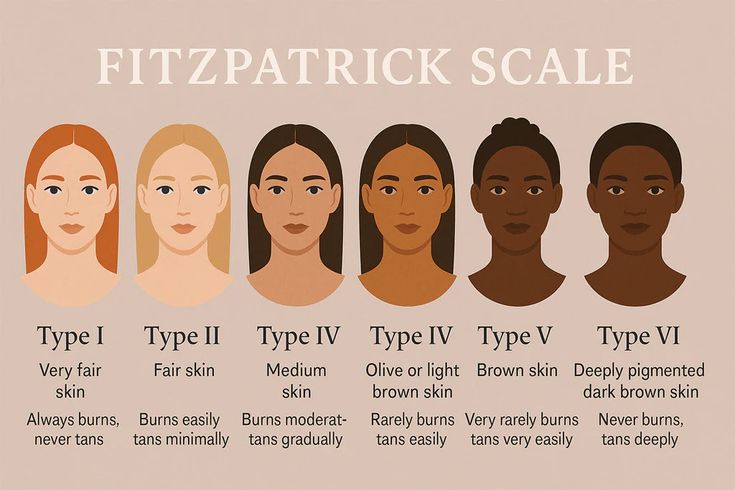
The Fitzpatrick Scale
What It Is
The Fitzpatrick Scale is a dermatological classification system developed in 1975 by Dr. Thomas Fitzpatrick. It sorts skin into six types based on how it responds to UV exposure — specifically, how easily it burns versus how easily it tans.
It's not just trivia — dermatologists use it to judge PIH and scarring risk, choose safe laser and peel settings, and estimate skin cancer risk. Every 'Skin of Color' section in this app refers back to Fitzpatrick types IV–VI, so understanding the scale makes the rest of the concerns content click into place.
The Six Types
Always burns, never tans
Burns easily, tans minimally
Sometimes burns, tans gradually
Rarely burns, tans easily
Very rarely burns, tans darkly
Almost never burns
Why It Matters for Skin of Color
Types IV through VI are collectively referred to as 'skin of color' or melanin-rich skin throughout this app. These types have more reactive, larger, and more widely distributed melanocytes — meaning inflammation from acne, eczema, or even a minor scrape is far more likely to trigger Post-Inflammatory Hyperpigmentation (PIH) than in Types I–III.
This is also why 'one-size-fits-all' skincare advice often fails: a treatment that's safe and effective on Type II skin (peels, high-strength acids, aggressive extractions) can trigger burns, dark spots, or scarring on Type V or VI skin. Knowing your Fitzpatrick type helps you choose ingredient strengths and treatments that work with your skin instead of against it.
Skin Type
Find your type and the ingredients that suit it.
Oily Skin
Oily Skin
The Biology of Oily Skin
Oily skin is entirely driven by your sebaceous glands. These are tiny glands located in your hair follicles that produce sebum — a natural, waxy oil designed to lubricate and protect your skin.
In normal skin, these glands produce just enough sebum to keep the skin barrier healthy. In oily skin, these glands are hyperactive. They pump out an excess of sebum, which pools on the surface (causing the visible shine) and stretches out the hair follicles (which is why oily skin usually features visibly larger pores). When this excess oil mixes with dead skin cells, it forms a plug, leading to blackheads, whiteheads, and acne.
The goal with oily skin is not to dry it out completely. If you strip the skin of all its oil, your sebaceous glands will panic and pump out even more oil to overcompensate (a phenomenon known as rebound oiliness). The goal is to regulate the oil and keep the pores clear.
Ingredients to Look For (Your Best Friends)
When shopping for products, you want ingredients that manage oil production, unclog pores, and hydrate without adding heavy lipids.
This is the gold standard for oily skin. Unlike other acids that only work on the surface, BHA is oil-soluble. This means it can actually penetrate through your skin's oil to dissolve the gunk inside your pores, clearing blackheads and preventing breakouts.
A true multitasker. Niacinamide actively helps regulate the amount of sebum your glands produce. It also calms inflammation and strengthens the skin barrier.
Oily skin still gets dehydrated (lacking water). These ingredients are humectants—they act like tiny sponges that pull water into the skin without adding a single drop of oil or clogging your pores.
By speeding up how fast your skin sheds dead cells, retinoids prevent the buildup of dead skin that traps oil in the pores. They are excellent for both acne prevention and long-term skin health.
Used as a weekly wash-off mask, these natural clays act like magnets to absorb excess surface oil and temporarily tighten the appearance of pores.
Ingredients to Avoid (The Saboteurs)
Many products marketed for oily or acne-prone skin actually contain ingredients that make the problem worse in the long run.
These are commonly found in cheap toners. They instantly degrease the skin and make it feel tight and matte, but they severely damage your moisture barrier. This triggers the "rebound oiliness" mentioned earlier, leaving you oilier a few hours later.
Not all oils are bad, but heavy oils with large molecular sizes will clog your pores. Avoid coconut oil, cocoa butter, and wheat germ oil. (If you want to use an oil, opt for lightweight, non-comedogenic ones like squalane, rosehip, or jojoba).
These ingredients are designed to seal moisture into severely dry skin. On oily skin, they act like a layer of plastic wrap, trapping your natural sebum, sweat, and dead skin cells against your face, which creates a breeding ground for acne bacteria.
Scrubbing oily skin violently doesn't stop oil production; it just causes micro-tears and inflammation, making breakouts redder and more painful. Stick to chemical exfoliants like Salicylic Acid instead.
Dry Skin
Dry Skin
The Biology of Dry Skin
Dry skin isn't just about a lack of water; it fundamentally comes down to a lack of lipids (fats and natural oils).
Your skin's outermost layer (the stratum corneum) is designed like a brick wall. The skin cells are the "bricks," and a mixture of natural lipids—primarily ceramides, cholesterol, and fatty acids—acts as the "mortar" holding it all together.
In dry skin, the sebaceous glands produce very little sebum (oil), and the skin naturally synthesizes fewer of these structural lipids. When this lipid "mortar" is weak, two things happen:
Moisture escapes: Water easily evaporates out of your skin into the air, a process dermatologists call Transepidermal Water Loss (TEWL).
Irritants get in: Microscopic gaps form in the barrier, allowing environmental irritants, allergens, and bacteria to slip in, which is why dry skin often feels sensitive, red, and itchy.
The goal with dry skin is to artificially replace the lipids your body isn't making, draw water back into the skin, and seal it all in.
Ingredients to Look For (Your Best Friends)
To successfully treat dry skin, you need a combination of three specific types of moisturizing ingredients that work as a team.
These are the water magnets. They draw moisture from the environment and pull it into the surface layers of your skin. Urea is particularly excellent for dry skin because it deeply hydrates while also gently softening and dissolving rough, flaky patches.
These ingredients step in to replace your missing "mortar." They fill in the microscopic gaps between your flaking skin cells, instantly smoothing the texture and repairing the compromised barrier.
These are the heavy lifters. They sit on top of the skin and create a physical, breathable shield that traps the water and emollients underneath so they cannot evaporate.
While famous for brightening, it is incredible for dry skin because it actually stimulates your skin to naturally produce more of its own ceramides, strengthening your barrier from the inside out over time.
Ingredients to Avoid (The Saboteurs)
Because dry skin has a compromised, "leaky" barrier, it is inherently more fragile and prone to irritation. You must protect the little oil you do have.
Ingredients like Sodium Lauryl Sulfate create a rich, bubbly lather in face washes, but they aggressively strip away natural oils. Opt for creamy, lotion-like cleansers that don't foam.
Often used in toners to make products dry down quickly, these rapidly dissolve the skin's fragile lipid barrier, leading to immediate dehydration and tightness.
Because your skin barrier has gaps, fragrance molecules penetrate deeper and faster than they would on normal skin. This makes dry skin highly susceptible to stinging, redness, and allergic contact dermatitis.
When your skin is flaky, it's tempting to violently scrub the flakes away. However, gritty scrubs create micro-tears in an already weakened barrier, leading to more moisture loss and inflammation. If you need to exfoliate, use a gentle hydrating chemical exfoliant like Lactic Acid instead.
Combination Skin
Combination Skin
The Biology of Combination Skin
Combination skin happens because the distribution of sebaceous glands on your face is uneven.
Human biology dictates that we have a higher concentration of oil glands in the center of our face—the forehead, down the nose, and the chin. This area is commonly known as the T-zone.
In combination skin, this natural discrepancy is exaggerated:
The T-Zone (Oily): The sebaceous glands here are hyperactive. They overproduce sebum, leading to enlarged pores, mid-day shine, and a tendency for blackheads and breakouts along your forehead and nose.
The U-Zone / Cheeks (Dry): The sebaceous glands on your cheeks and jawline are underactive. They fail to produce enough natural lipids, leaving the skin barrier in these areas compromised. As a result, moisture evaporates easily, leaving your cheeks feeling tight, flaky, or sensitive.
The biggest mistake people with combination skin make is trying to find one "magic bullet" product that will fix both extremes. If you treat your whole face like it's oily, you will destroy the barrier on your dry cheeks. If you treat your whole face like it's dry, you will severely clog your T-zone.
The goal with combination skin is balance and zone therapy—using ingredients that satisfy both needs, or applying specific treatments only where they are needed.
Ingredients to Look For (Your Best Friends)
When treating combination skin, you want lightweight, universally friendly hydrators all over, and smart balancing ingredients that adapt to what the skin needs.
This is the holy grail for combination skin. It is an adaptogen-like ingredient. On your T-zone, it actively regulates and slows down excess sebum production. On your dry cheeks, it stimulates the production of natural ceramides to heal the flaky barrier.
Because your oily areas still need water (not oil) and your dry areas desperately need water, these lightweight water-binders are perfect for your entire face. They hydrate deeply without adding any heavy grease.
If your dry cheeks need an oil, squalane is the best choice. It is a skin-identical lipid (meaning your body recognizes it), it is highly moisturizing for dry areas, but it is completely non-comedogenic (won't clog pores) if it migrates to your T-zone.
Instead of washing your whole face with a harsh acne cleanser, use a BHA liquid exfoliant strictly on your T-zone to dissolve blackheads and clear out the oil, leaving your dry cheeks untouched.
Instead of heavy thick creams or stripping matte lotions, look for moisturizers with a "gel-cream" or "water-cream" texture. They provide enough moisture for the cheeks but absorb cleanly enough for the T-zone.
Ingredients to Avoid (The Saboteurs)
Combination skin is easily thrown out of balance. Using extreme products designed exclusively for severe acne or severe dryness will always ruin half of your face.
If you apply a thick, heavy cream to your entire face to soothe your dry cheeks, you will almost instantly cause breakouts and extreme congestion in your T-zone. If you must use them, apply them only to the dry patches.
Cleansers formulated for very oily skin usually contain strong surfactants (like SLS) and drying alcohols. While your T-zone might feel pleasantly clean, these washes will strip your dry cheeks of their few remaining natural oils, leaving them tight, red, and stinging. Stick to gentle, pH-balanced gel cleansers.
People with combination skin often use harsh toners to "degrease" their forehead and nose. However, sweeping this alcohol over the rest of the face dehydrates the cheeks and triggers rebound oiliness in the T-zone.
Applying a heavy bentonite clay mask to your entire face will suck the life out of your dry cheeks. If you want to use clay to clear pores, practice "multi-masking": put the clay only on your T-zone, and put a hydrating mask on your cheeks.
Normal Skin
Normal Skin
The Biology of Normal Skin
Scientifically, normal skin is defined by perfect homeostasis (biological balance).
Everything in the skin is functioning exactly as it was designed to:
Balanced Sebum: Your sebaceous glands produce just enough oil to create a protective, moisturizing film over your face, but not so much that it pools in your pores or causes a greasy shine.
Intact Lipid Barrier: The "mortar" holding your skin cells together is strong and packed with natural ceramides. This locks water inside the skin and keeps environmental irritants out.
Even Circulation: The micro-capillaries beneath the skin deliver a steady, healthy supply of blood, giving normal skin a natural, even radiance without the redness of sensitive skin or the dullness of dry skin.
Because your skin is already doing the heavy lifting, your goal is maintenance and protection. You don't need to fix a problem; you just need to defend your skin from the sun, pollution, and the natural aging process.
Ingredients to Look For (Your Best Friends)
Since you don't have to fight oil or desperately replenish lost lipids, you have the luxury of focusing purely on optimizing skin health and preventing future damage.
These are your daily defenders. Throughout the day, UV rays and pollution create "free radicals" that break down your skin's collagen. Antioxidants neutralize these threats before they can cause wrinkles or dark spots. Vitamin C, in particular, will give normal skin a beautiful, glass-like glow.
Even healthy skin loses a little water throughout the day. Using these lightweight hydrators ensures your skin stays plump and bouncy without messing with your perfectly balanced natural oils.
These are short chains of amino acids that act as messengers, telling your skin to produce more collagen and elastin. They are fantastic for preventative anti-aging.
While normal skin sheds dead cells well on its own, a gentle alpha-hydroxy acid (AHA) used a few times a week keeps the surface perfectly smooth and ensures your other ingredients absorb properly.
The single most important ingredient for normal skin. Since you don't have pressing concerns to fix, preventing UV damage is the most impactful thing you can do to keep your skin "normal" for decades.
Ingredients to Avoid (The Saboteurs)
The easiest way to ruin normal skin is by "overdoing" it. Because your skin is resilient, it can handle a lot, but throwing too many harsh ingredients at it will eventually break its natural balance.
Traditional bar soaps are highly alkaline. Washing your face with them strips away your perfect acid mantle (the protective acidic film on your skin's surface), which can trigger dryness and sensitivity over time.
It's tempting to chase a smoother texture, but if you aggressively scrub or acid-peel normal skin every day, you will destroy your healthy lipid barrier. You will essentially create sensitive, inflamed skin where there was none.
Just like with dry and oily skin, high concentrations of bad alcohols will slowly degrade your healthy moisture barrier over time.
You don't need heavy slugging with pure petrolatum or thick cocoa butter unless you are exposing your skin to extreme environmental conditions (like skiing). On an average day, these will just unnecessarily clog your well-behaved pores.
Sensitive Oily Skin
Sensitive Oily Skin
The Biology of Sensitive Oily Skin
Sensitive oily skin is what happens when hyperactive sebaceous glands collide with a compromised skin barrier. Often, this is a self-inflicted condition caused by aggressively trying to "cure" standard oily skin with harsh products.
In this state, two conflicting biological processes are happening at once:
Excess Sebum: Your sebaceous glands are still in overdrive, pumping out too much oil, leading to surface shine, enlarged pores, and congestion.
Barrier Damage: The protective lipid "mortar" in your outermost layer of skin has been stripped away.
Because the barrier is broken, water constantly evaporates out of the skin (severe dehydration). When your skin senses this profound lack of water, your sebaceous glands panic and pump out even more oil to try and seal the surface. Meanwhile, because the barrier is "leaky," acne bacteria, pollution, and harsh ingredients easily slip into those stretched pores.
This creates a vicious cycle: your skin is incredibly greasy, yet it feels tight and stings when you apply basic products. Instead of standard blackheads, you get red, angry, inflamed breakouts.
The goal with sensitive oily skin is to hit pause on the aggressive acne treatments. You must rebuild the protective barrier using lightweight, oil-free hydration, and gently regulate oil production without triggering further inflammation.
Ingredients to Look For (Your Best Friends)
When treating this skin type, you need ingredients that soothe inflammation and repair the barrier without adding heavy, pore-clogging lipids.
These are your biological fire extinguishers. They rapidly calm redness, soothe stinging, and reduce the angry inflammation associated with sensitive acne, helping the skin heal much faster.
A true hero for this specific skin type. It simultaneously regulates your sebaceous glands to slow down oil production and stimulates ceramide production to rebuild your broken barrier. (Keep the percentage low; 10%+ can trigger redness in sensitive skin).
These humectants are crucial. They pull weightless water back into your dehydrated skin. Once your skin's thirst is quenched, your glands will stop overproducing rebound oil.
While ceramides are usually associated with dry skin, sensitive oily skin needs them to fix the barrier. Look for them in oil-free gel or water-cream formulations so they repair the "mortar" without clogging pores.
If you need to exfoliate, skip the strong acids. PHAs (like Gluconolactone) have massive molecular sizes, meaning they only gently polish the very surface of the skin without penetrating deeply enough to irritate your fragile nerve endings.
Ingredients to Avoid (The Saboteurs)
If you have sensitive oily skin, throwing the kitchen sink at your breakouts will only make them redder, more painful, and more frequent. You must treat your skin like it is injured.
While these are great for normal oily skin, applying them to a broken barrier is like pouring rubbing alcohol on an open wound. They will trigger massive inflammation. You must heal the barrier before reintroducing active treatments.
These are often found in matte sunscreens and astringent toners. They instantly dissolve the tiny amount of healthy barrier lipids you have left, guaranteeing extreme dehydration and a massive surge of rebound oil hours later.
If your face feels tight, squeaky, or dry after washing, you have just damaged your barrier. Switch to a gentle, non-foaming gel cleanser that respects the skin's acidic pH.
Plant oils like peppermint, eucalyptus, and tea tree are heavily marketed for acne, but they are highly volatile compounds. In a compromised barrier, they penetrate deeply and trigger allergic contact dermatitis and stinging.
It is tempting to use heavy creams to fix the tight, stinging sensation of a damaged barrier, but on oily skin, these act like plastic wrap. They will trap your excess sebum and bacteria inside the pore, leading to immediate, severe breakouts.
Sensitive Dry Skin
Sensitive Dry Skin
The Biology of Sensitive Dry Skin
If standard dry skin is a brick wall missing a little mortar, sensitive dry skin is a wall that is actively crumbling. It occurs when a chronic lack of lipids (fats) leads to a total collapse of the skin's protective barrier, leaving your nerve endings exposed and hyper-reactive.
In this state, your skin is battling two extreme problems simultaneously:
Severe Dehydration: Because the lipid barrier is fundamentally broken, it is biologically impossible for your skin to hold onto water. Transepidermal Water Loss (TEWL) happens constantly, leading to a tight, rough, and flaking surface.
Constant Inflammation: Microscopic cracks in your skin remain wide open. Everyday things that shouldn't bother you — tap water, wind, sweat, or even very gentle skincare products — slip through these cracks and trigger a defensive immune response.
This results in a cycle of visible redness, burning, itching, and dry patches that can sometimes escalate into conditions like eczema or contact dermatitis.
The goal with sensitive dry skin isn't just to moisturize; it is to rehabilitate. You must act as the skin's artificial barrier while deeply soothing the inflammation so the skin has a chance to repair itself.
Ingredients to Look For (Your Best Friends)
You need rich, heavy-duty barrier repair ingredients combined with powerful anti-inflammatories. The formula should be as simple and inert as possible.
This specific trio mimics your skin's natural lipid ratio. Look for thick creams that feature all three to quickly plug the holes in your failing barrier.
An FDA-approved skin protectant that is a lifesaver for this skin type. It binds to the skin to form a physical protective seal while actively calming the itchiness and redness associated with a damaged barrier.
The ultimate occlusive. It is entirely non-irritating and prevents 99% of water loss. Applying a thin layer over your moisturizer at night (a practice known as "slugging") creates an artificial barrier so your skin can heal underneath.
A deeply soothing humectant that draws in moisture while actively promoting wound healing and cell regeneration in the damaged barrier.
A rich, highly tolerable plant butter that acts as both an emollient (smoothing the flakes) and a mild occlusive (trapping the water).
Ingredients to Avoid (The Saboteurs)
When your skin is in this state, less is more. Anything that isn't actively repairing the barrier or soothing inflammation is a potential threat.
Using any form of exfoliant on sensitive dry skin is like sanding a piece of wood that has already been whittled down to a toothpick. You will completely destroy whatever fragile barrier you have left.
These are the number one triggers for contact dermatitis. When your barrier has microscopic gaps, fragrance molecules penetrate directly to the nerve endings, causing immediate stinging and burning. Always demand 100% fragrance-free products.
While excellent for aging, retinoids speed up cell turnover and can be inherently drying. Using them on a broken, sensitive barrier will result in severe peeling, redness, and a chemical burn sensation.
Even "gentle" foaming cleansers can strip the very few natural lipids your skin is managing to produce. Switch entirely to non-foaming cream, milk, or oil cleansers, and only wash your face with cleanser once a day (in the evening).
While usually beneficial, L-Ascorbic Acid (Vitamin C) requires a very low (acidic) pH to work, which will sting terribly on a compromised barrier. Similarly, high-dose Niacinamide can cause flushing and irritation when the skin is highly reactive.
Sensitive Combination Skin
Sensitive Combination Skin
The Biology of Sensitive Combination Skin
Sensitive combination skin is arguably the most difficult and frustrating skin type to manage because it is a biological paradox. It is what happens when you take the natural imbalance of combination skin (an oily T-zone and a dry U-zone) and add a universally broken skin barrier over the entire face.
In standard combination skin, the barrier is generally intact; the issue is just uneven oil distribution. In sensitive combination skin, the lipid "mortar" that protects your face is damaged everywhere, leading to two extreme, simultaneous reactions:
1. The T-Zone (Oily, Dehydrated & Inflamed): Because the barrier is broken, water evaporates out of your T-zone. Your hyperactive sebaceous glands panic and pump out massive amounts of rebound oil to compensate. But because irritants are easily entering the broken barrier, you don't just get normal blackheads — you get red, painful, inflamed breakouts (often mistaken for hormonal acne).
2. The U-Zone (Severely Dry & Reactive): Your cheeks already lacked natural oils. Now, with a broken barrier, they are losing water rapidly. The skin here feels incredibly tight, looks red, flakes easily, and burns or stings when you apply basic skincare products.
The biggest mistake people make with this skin type is trying to aggressively treat the acne in the T-zone while ignoring the burning cheeks, or heavily slugging the cheeks and causing massive congestion in the T-zone.
The goal here is total barrier repair first, balancing second. You must treat the entire face like it is injured before you can worry about clearing pores or deep moisturizing.
Ingredients to Look For (Your Best Friends)
You need "Goldilocks" ingredients — things that are deeply soothing and barrier-repairing, but totally weightless so they don't clog your oily zones.
The ultimate ingredient for this skin type. It drastically reduces the red, angry inflammation in your oily T-zone breakouts while simultaneously soothing the burning and stinging on your dry cheeks.
An absolute necessity. It is one of the only ingredients that adapts to what the skin needs. It tells your T-zone to stop producing so much oil, while telling your U-zone to produce more hydrating ceramides. Keep the concentration low so it doesn't sting the broken barrier.
Both your oily zones and dry zones are desperately lacking water (dehydration). These humectants pull water into the skin without adding a single drop of pore-clogging oil.
You need ceramides to rebuild the broken "mortar" across your whole face, but thick ceramide creams will clog your T-zone. Look for lightweight, watery gel-creams packed with ceramides (often found in Korean skincare).
A fantastic, weightless antioxidant that gently regulates sebum production in the center of the face while calming redness on the cheeks.
Ingredients to Avoid (The Saboteurs)
When your barrier is compromised across both oily and dry zones, your skin is highly volatile. You must avoid anything aggressive.
If you apply these to your whole face, you will chemically burn your dry cheeks. Even if you only apply them to your T-zone, a damaged T-zone will react to these with extreme redness and peeling. Do not use active acids until the barrier is fully repaired.
Your broken barrier allows these volatile plant oils (like lavender, citrus, and tea tree) to penetrate straight to your nerve endings, causing stinging on the cheeks and allergic breakouts on the forehead.
A foaming cleanser might make your greasy T-zone feel clean, but it will violently strip the last remaining lipids from your dry, burning cheeks. You must switch to a gentle, milky, or jelly cleanser.
Do not apply heavy occlusives like coconut oil, shea butter, or thick mineral oil to your whole face to fix your dry cheeks. They will instantly trap heat and bacteria in your T-zone, causing a massive breakout.
Often used to "degrease" the face, these are catastrophic for sensitive combination skin. They evaporate the water out of your already dehydrated skin, leaving your cheeks stinging and triggering a massive wave of rebound oil in your T-zone hours later.
Skin Concerns
Acne, dark marks, texture, and more — explained.
Acne
Acne
Overview
A deeper dive into the biology of acne, its specific impact on melanin-rich skin, and a comprehensive breakdown of active ingredients to embrace or avoid will help you build an effective, skin-safe routine.
1. The Deep Pathophysiology of Acne
Acne vulgaris is a multi-factorial disorder of the pilosebaceous unit (the hair follicle and its accompanying oil gland). Understanding the biological sequence explains why standard treatments target specific steps:
Step 1: Seborrhea (Excess Sebum): Androgen hormones (like testosterone and DHEA-S) stimulate sebaceous glands to enlarge and produce excess sebum. Insulin and Insulin-like Growth Factor-1 (IGF-1)—often spiked by high-glycemic diets—also trigger this process.
Step 2: Follicular Hyperkeratinization: Instead of shedding cleanly to the skin's surface, dead skin corneocytes stick together inside the pore. This creates dense plugs known as microcomedones, which later manifest as open comedones (blackheads) or closed comedones (whiteheads).
Step 3: Bacterial Proliferation: Cutibacterium acnes (C. acnes), a resident skin bacterium, thrives in this anaerobic, lipid-rich plug. It feeds on sebum, multiplying rapidly and releasing metabolic byproducts.
Step 4: The Inflammatory Cascade: The immune system detects the trapped bacteria and debris, activating Toll-like receptors and releasing pro-inflammatory cytokines. This triggers the redness, swelling, and pus characteristic of papules, pustules, and deep nodules/cysts.
2. Why Skin of Color (SOC) Reacts Differently
Melanin-rich skin (Fitzpatrick skin types IV through VI) possesses unique structural and biological responses to inflammation that require a specialized approach:
Melanocyte Hyperactivity: Melanocytes are pigment-producing cells located in the basal layer of the epidermis. When inflammation occurs (from a deep cyst or a harsh scrub), these cells become overactive and dump excess melanin (pigment) into surrounding skin cells.
Post-Inflammatory Hyperpigmentation (PIH): Unlike lighter skin tones which predominantly experience prolonged redness (Post-Inflammatory Erythema or PIE), skin of color predominantly develops stubborn brown, grey-brown, or deep purple spots. These can take 6 to 24 months to fade naturally without intervention.
Post-Inflammatory Hypopigmentation: Severe, deep, or chronic inflammation—or aggressive treatments like high-strength chemical peels or localized steroid injections—can sometimes destroy melanocytes entirely, leaving permanent white or light patches.
Keloid and Hypertrophic Scarring: Individuals with skin of color have a higher genetic predisposition to fibroproliferative disorders, meaning severe inflammatory acne (nodules and cysts) is much more likely to leave raised, thickened scars.
3. Comprehensive Guide to Active Ingredients
Treating acne in skin of color requires a dual strategy: clearing the acne while actively suppressing melanin synthesis and reducing inflammation.
The Gold Standard: Fades PIH while simultaneously killing acne bacteria and calming redness without bleaching normal skin. Recommended strength: 10% (Over-the-counter) to 15%–20% (Prescription).
Prevents dead skin from clumping in pores and accelerates the shedding of pigmented surface cells. Recommended form: Adapalene 0.1% (OTC), Retinol (0.25%-1%), Tretinoin (Prescription).
An alpha-hydroxy acid with a larger molecular structure. It penetrates the skin slower, minimizing irritation while brightening skin. Recommended strength: 5% to 10% serums or toners.
Dives deep into sebum-filled pores to dissolve microcomedones and clear blackheads/whiteheads. Recommended strength: 0.5% to 2% cleansers or leave-on liquids.
Inhibits the transfer of melanosomes to skin cells and strengthens the lipid barrier, reducing sensitivity. Recommended strength: 2% to 5% serums or moisturizers.
Rapidly destroys C. acnes bacteria by releasing oxygen radicals into the pore. Recommended strength: Low strength only (2.5%) to prevent barrier irritation and subsequent PIH.
4. Ingredients and Practices to Avoid
Certain formulations or habits can trigger a chain reaction of inflammation, worsening both acne and hyperpigmentation in melanin-rich skin.
Examples: Coconut oil, cocoa butter, isopropyl myristate, ethylhexyl palmitate, and wheat germ oil. The Risk: These heavy ingredients have high comedogenic ratings and quickly block pores. Watch out for heavy styling oils and butters used in textured hair care migrating onto the forehead, hairline, and cheeks.
Examples: Apricot scrubs, walnut shell powders, stiff facial cleansing brushes, and aggressive manual extraction. The Risk: The jagged edges cause micro-tears in the skin barrier. The body views this injury as trauma, immediately triggering a surge in melanin production that deepens dark spots.
The Risk: Applying high-strength glycolic acid peels or unbuffered TCA without professional oversight can cause chemical burns, localized inflammation, and severe post-inflammatory pigment alterations.
Examples: Alcohol denat., SD alcohol 40, Sodium Lauryl Sulfate (SLS). The Risk: These strip the skin's natural lipid barrier, causing trans-epidermal water loss. A compromised barrier leads to irritation, inflammation, and rebound oil production.
Examples: Linalool, limonene, lavender oil, citrus oils. The Risk: Fragrances are a leading cause of allergic contact dermatitis. In skin of color, contact dermatitis manifests as intense inflammation, leaving behind stubborn hyperpigmentation.
The Routine Essential
Always pair your acne-fighting actives with a broad-spectrum sunscreen (SPF 30 or higher) containing mineral filters (Zinc Oxide/Titanium Dioxide) or modern micronized chemical filters that do not leave a grey or purple cast on deeper skin tones. UV exposure triggers melanin production, which permanently "bakes" your acne marks into long-lasting dark spots.
Post-Acne Marks (PIE)
Post-Acne Marks (PIE)
Overview
When people talk about "post-acne marks," they are frequently mislabeling everything left behind by a breakout as hyperpigmentation. In clinical dermatology, a vital distinction exists: post-acne marks are not hyperpigmentation.
While hyperpigmentation is a pigment issue rooted in melanin, true post-acne marks—specifically Post-Inflammatory Erythema (PIE)—are a vascular issue rooted in blood vessels. Treating a vascular mark with standard skin-lightening ingredients designed for melanin yields poor results because the root cause is entirely different.
1. The Core Breakdown: Marks vs. Pigmentation vs. Scars
To understand what you are treating, the post-breakout landscape breaks down into three distinct categories:
Post-Acne Marks (PIE - Post-Inflammatory Erythema): Flat, red, pink, or purple marks caused by damaged or dilated capillaries (blood vessels) near the skin's surface. They involve zero changes to skin texture and zero excess melanin.
Hyperpigmentation (PIH - Post-Inflammatory Hyperpigmentation): Flat, brown, black, or grey-brown spots caused by melanocytes overproducing melanin due to inflammation.
Acne Scars: Structural, permanent changes to the skin's architecture. They involve a change in skin depth—either indented (atrophic/pitted) or raised (hypertrophic/keloid).
2. The Pathophysiology of Vascular Marks (PIE)
Understanding how a red mark forms explains why standard fading creams often fail:
Step 1: The Inflammatory Trauma: When a deep pimple, cyst, or picked lesion erupts, the body signals an emergency response. It initiates angiogenesis—the creation of new, tiny blood vessels (capillaries)—and dilates existing local blood vessels to rush white blood cells and nutrients to the site for repair.
Step 2: Capillary Damage and Stretching: The micro-vessels surrounding the lesion become stretched out, structurally weakened, or physically damaged by the intense pressure of the inflammation.
Step 3: The Lingering Flush: Even after the active acne lesion has completely flattened and healed, these micro-vessels remain dilated and leaky. Because blood flows continuously through them, they shine through the semi-translucent epidermis as persistent red, pink, or purple flat marks.
3. The Home Diagnostic Test: The Blanch Test
Because PIE (vascular marks) and PIH (pigment) often look similar at a glance—especially in intermediate skin tones—dermatologists use a simple physical test to tell them apart:
How to perform it: Take a clean clear glass (or press a firm fingertip) directly onto the flat post-acne mark and apply firm pressure for three seconds, then release.
The Result for PIE (Vascular Mark): Under pressure, the blood is temporarily displaced from the capillaries, causing the mark to turn white or completely fade out. When you release pressure, the blood rushes back and the red/pink color instantly returns.
The Result for PIH (Pigment): Melanin is a physical pigment fixed within skin cells; blood flow does not affect it. If you press down and the mark retains its exact color, shape, and intensity without changing, it is true hyperpigmentation, not a vascular mark.
4. PIE in Skin of Color: The Overlooked Reality
A widespread myth dictates that Post-Inflammatory Erythema only occurs in fair-skinned individuals (Fitzpatrick I-III), while individuals with skin of color (Fitzpatrick IV-VI) only get hyperpigmentation.
The biological reality is more complex:
Dual-Presentation: Melanin-rich skin does experience PIE, but because it is layered over deeper baseline melanin, the marks often present as dusky, dark purplish-red, or muddy maroon spots rather than bright cherry-red dots.
The Transition Trap: In melanin-rich skin, vascular inflammation (PIE) acts as an instant trigger for melanocyte activation. A single breakout often leaves behind a hybrid mark—vulnerable dilated capillaries bleeding into a surge of local melanin production. Consequently, a red mark rapidly darkens into a brown PIH spot within weeks.
5. Ingredients to Target Vascular Marks (PIE)
Because PIE is a vascular and inflammatory problem, ingredients must target vasoconstriction, vascular wall strengthening, and anti-inflammation rather than just tyrosinase (pigment) inhibition:
Strengthens the structural integrity of capillary walls, preventing them from staying dilated, while calming surface redness.
Down-regulates inflammatory pathways that keep micro-vessels dilated and helps manage the dual threat of concurrent PIH.
Rich in triterpenes that accelerate vascular healing, soothe irritated tissue, and repair compromised micro-vessels.
Over long-term use (months), retinoids stimulate collagen production, physically thickening the dermal matrix so surface capillaries are less visible.
Decreases vascular proliferation and reduces the micro-vascular bleeding components tied to persistent red-purple marks.
6. Practices and Factors to Avoid with PIE
Certain habits actively prolong vascular dilation and make post-acne red marks take significantly longer to resolve:
Forcibly popping a pimple creates high local pressure that shatters fragile micro-capillaries, drastically expanding the surface area of the resulting PIE mark.
High-heat environments (hot yoga, saunas, steamy showers, or intense sun exposure) cause vasodilation—the natural expansion of blood vessels. This literally flushes blood back into the damaged capillaries, making PIE marks look freshly inflamed and delaying healing.
Stripping the skin barrier with harsh physical scrubs or overly potent acid combinations increases systemic skin inflammation, signaling the body to keep local blood vessels dilated to rush healing factors to the surface.
Hyperpigmentation (PIH)
Hyperpigmentation (PIH)
Overview
Post-Inflammatory Hyperpigmentation (PIH) is the body's overzealous response to skin trauma or inflammation. Unlike Post-Inflammatory Erythema (PIE), which is rooted in blood vessels, PIH is entirely a pigmentary issue. It represents an excess accumulation of melanin—the pigment responsible for skin, hair, and eye color—deposited within the skin layers following an inflammatory event like a breakout.
1. The Deep Pathophysiology of PIH
To understand how a brown or black spot forms and why it lingers, you have to look at the cellular machinery of melanin production (melanogenesis):
Step 1: The Inflammatory Trigger: When a pimple, cyst, or abrasion damages the skin, inflammatory mediators are released. These include cytokines, prostaglandins, and leukotrienes.
Step 2: Activation of Melanocytes: These inflammatory signals act as a chemical alarm that stimulates melanocytes—specialized pigment-producing cells located in the basal layer of the epidermis.
Step 3: Tyrosinase Overdrive: Inside the melanocytes, the enzyme tyrosinase is activated. Tyrosinase is the rate-limiting catalyst that converts the amino acid tyrosine into melanin. Under the influence of inflammation, tyrosinase goes into hyperdrive, churning out massive amounts of melanin granules (melanosomes).
Step 4: Pigment Transfer and Trapping: The melanocytes transfer these dense clusters of melanin up into surrounding epidermal skin cells (keratinocytes). As these cells migrate toward the surface, they carry the excess pigment with them. If the inflammation penetrated deep into the dermis (dermal PIH), pigment leaks downward and gets trapped by immune cells called macrophages, resulting in stubborn blue-gray or deep brown spots that can last for years.
2. Why Melanin-Rich Skin is Vulnerable to PIH
While PIH can occur in any skin tone, it is quantitatively more prevalent, darker, and longer-lasting in Fitzpatrick skin types IV through VI (skin of color) due to distinct biological differences:
Higher Baseline Melanin Reactivity: Melanocytes in skin of color are inherently more reactive and larger, primed to produce more melanin at the slightest provocation.
Larger and More Distributed Melanosomes: In darker skin, melanosomes are larger, more pigmented, and individually distributed throughout all layers of the epidermis (rather than clustered in caps like in lighter skin). When inflammation hits, a vast field of cells responds with heavy pigment production.
Slower Natural Desquamation: The cellular turnover rate can sometimes retain pigmented cells longer in the upper layers of the skin, meaning the dark spots take significantly longer to slough off naturally.
3. Comprehensive Guide to Active Ingredients for PIH
Treating PIH requires attacking the melanin production line at multiple points: inhibiting tyrosinase, blocking pigment transfer, and accelerating skin cell turnover.
The historical "gold standard" prescription agent; shuts down the enzyme responsible for melanin synthesis. (Best used in short-term cycles).
Selectively targets and destroys hyperactive melanocytes without affecting normal skin pigment. Safe for long-term use.
Plant-derived or fungal byproducts that safely suppress pigment production and brighten discoloration.
Stops pigment from moving out of the melanocytes and into the visible surface skin cells, while repairing the skin barrier.
Speeds up the shedding of pigmented surface cells, forcing the skin to cycle out dark spots faster while boosting collagen.
Dissolves the glue holding dead, hyperpigmented skin cells together, revealing clearer, fresher skin underneath.
4. Practices and Factors That Worsen PIH
Certain daily habits and environmental triggers can reactivate dormant melanocytes, rendering even the best skincare routine ineffective:
Ultraviolet (UV) radiation is the ultimate catalyst for melanin production. Sunlight stimulates alpha-MSH (melanocyte-stimulating hormone), which instantly darkens existing PIH and "bakes" temporary marks into permanent fixtures. Daily broad-spectrum SPF 30+ is mandatory.
Aggressive physical scrubbing, picking at scabs, or using unbuffered high-strength chemical peels causes micro-injuries. Every time the skin experiences trauma, it triggers a fresh wave of localized inflammation and subsequent hyperpigmentation.
Prolonged exposure to high heat (saunas, intense stove heat, or hot yoga) causes thermal vasodilation and localized skin warming, which has been clinically shown to stimulate melanocyte activity and worsen stubborn melasma and PIH.
Uneven Skin Tone
Uneven Skin Tone
Overview
Uneven skin tone—clinically referred to as dyschromia—is a broad term that describes a patchy, mottled, or heterogeneous complexion. Unlike Post-Inflammatory Hyperpigmentation (PIH) or Post-Inflammatory Erythema (PIE), which are localized markers tied to specific past trauma or breakouts, uneven skin tone is a macro-level canvas issue. It represents diffuse variations in color, texture, and light reflection across the entire face.
1. The Core Pathophysiology of Uneven Skin Tone
Dyschromia is rarely caused by a single factor; it is typically a multi-factorial cumulative condition driven by cellular fatigue, sun damage, and chronic low-grade micro-inflammation:
Solar Lentigines (Sun Spots / Age Spots): Chronic ultraviolet exposure causes localized clusters of melanocytes to go into a state of permanent over-activity, producing flat, distinct areas of excess pigment on sun-exposed zones like the forehead, cheeks, and nose bridge.
Melasma: A hormonal and UV-driven form of dyschromia characterized by symmetrical, blotchy, hyperpigmented patches (often on the upper lip, cheeks, and forehead). It involves vascular, mast cell, and fibroblast components alongside overactive melanocytes.
Asynchronized Desquamation (Cellular Buildup): As skin ages or faces environmental stress, the natural rate at which dead skin cells shed (desquamation) slows down. This creates an uneven microscopic layer of dead corneocytes that scatters light poorly, resulting in a dull, sallow, or "ashen" complexion.
Diffuse Micro-Inflammation: Low-level, invisible irritation from pollution, harsh cosmetics, or sub-clinical skin conditions causes continuous, widespread release of inflammatory cytokines, keeping melanocytes hyper-reactive on a regional scale.
2. Uneven Skin Tone in Skin of Color (SOC)
In melanin-rich skin, uneven skin tone presents unique visual characteristics and requires a distinct approach to management:
Periorbital and Perioral Hyperchromia: Skin around the eyes and mouth naturally possesses a higher concentration of melanocytes or thinner skin through which underlying vascular networks show. This creates natural shadowing or uneven rings that can make the face look tired or multi-shaded.
The Loss of Natural Radiance (Ashen Undertones): Because darker skin reflects light differently when cell turnover slows down, a buildup of dead skin cells doesn't just look flaky—it scatters light in a way that mutes the skin's natural undertones, leading to a grayish, ashen, or flat appearance.
Post-Inflammatory Diffuse Patchiness: Chronic conditions like eczema, contact dermatitis, or mild acne can leave behind large, blended areas of discoloration rather than sharp spots, making the overall complexion look muddy or unblended.
3. Comprehensive Guide to Active Ingredients for Uneven Skin Tone
Correcting a disjointed complexion requires ingredients that normalize cellular turnover, suppress multi-pathway pigment formation, and protect the skin matrix from oxidative stress.
Fades existing sun spots, protects against new UV-induced oxidation, and imparts an instant radiance boost.
Highly effective at treating stubborn, diffuse melasma and mottled discoloration without irritating melanin-rich skin.
Smooths the skin texture, accelerates cell turnover, and removes the dull, dead layer to reveal uniform skin underneath.
Safely blocks the enzyme responsible for uneven pigment patches, evening out background skin tone gently.
Improves overall skin texture, minimizes pore appearance, and creates a uniform, balanced skin canvas.
4. Practices and Factors That Worsen Uneven Skin Tone
Certain environmental exposures and routines amplify dyschromia, making a uniform complexion difficult to achieve:
UV-A, UV-B, and high-energy visible (HEV) blue light stimulate melanocytes continuously. Without broad-spectrum protection (including iron oxides for visible light), any progress made in fading uneven tone is instantly undone.
Using harsh, stripping cleansers or over-layering potent acids damages the skin barrier. A compromised barrier triggers chronic micro-inflammation, which directly stimulates uneven pigment synthesis across the face.
For conditions like melasma, internal triggers (birth control, pregnancy, stress-induced cortisol spikes) interact with external UV light to cause sudden, widespread shifts in skin tone that require specialized medical management.
Rough, Bumpy Skin
Rough, Bumpy Skin
Overview
Understanding rough, bumpy skin—medically known as Keratosis Pilaris—requires looking closely at how your skin grows, sheds, and reacts to irritation. When we translate the medical science into everyday terms, it becomes much easier to treat effectively, especially if you have skin of color.
What Actually Causes the Bumps?
Your skin is constantly renewing itself, pushing old cells to the surface to shed invisibly. With rough, bumpy skin, a specific hitch happens in this process:
The Protein Trap: Your skin makes a tough, protective protein called keratin (the same stuff your hair and nails are made of). In people with this condition, this protein hardens too quickly and gets stuck inside the microscopic openings where your hairs grow.
The Plug: Instead of shedding smoothly, these dead cells and extra protein pile up into tiny, hard plugs. That is what creates that permanent goosebump or sandpaper feeling on your skin.
The Dryness Connection: This condition is often genetic and linked to dry skin. When your skin barrier is weak, it struggles to hold onto water, making the skin cells tighter, drier, and more prone to plugging up.
Why Skin of Color Reacts Differently
If you have melanin-rich skin, managing rough texture comes with a major catch: your skin reacts to irritation by producing dark spots.
The Inflammation Trap: When rough skin is rubbed too hard by tight clothing, aggressively scrubbed, or scratched, your skin senses an injury. It sends a distress signal to the surrounding tissue, telling your pigment-making cells to produce extra melanin to "protect" the area.
Double Trouble (Texture + Dark Spots): While lighter skin tones usually turn red or pink from this irritation, skin of color develops Post-Inflammatory Hyperpigmentation (PIH). This means the bumps might eventually flatten, but they leave behind stubborn, dark brown patches.
The Ashen Look: Because the skin barrier is dry, it can also trap dead cells on the surface, making melanin-rich skin look dull, greyish, or ashen.
Ingredients to Look For (And What They Do)
To flatten the bumps without triggering dark spots, you need ingredients that gently dissolve the plugs and restore moisture:
A superstar ingredient. It acts like a gentle chemical key that breaks down the hard keratin plugs, while simultaneously pulling moisture deep into your skin.
A gentle exfoliating acid (derived from milk) with a larger molecule size, meaning it won't sink into your skin too fast. It softly loosens the glue holding dead cells together so they slide off smoothly, and it naturally helps fade dark spots.
An oil-loving acid that dives straight down into your hair follicles to dissolve trapped oils and dead skin from the inside out.
A calming ingredient that stops your skin from sending pigment to the surface, helping to clear up and prevent dark spots.
These rebuild your skin's natural protective shield so it stops losing moisture in the first place.
Ingredients and Habits to Avoid
Certain common habits and products can turn a simple texture problem into a long-lasting pigment problem:
Scrubbing rough skin feels logical, but jagged particles create tiny microscopic tears in your skin. That physical damage causes instant inflammation, which leads straight to dark spots on skin of color.
These oils are very thick and heavily pore-clogging. Instead of helping, they trap dead cells and keratin even deeper inside the hair follicles, making the bumps worse.
Highly concentrated, harsh chemical peels can shock melanin-rich skin, causing hidden irritation that darkens the skin afterward.
Hot water strips away your skin's natural oils, and synthetic fragrances irritate it. Both leave your skin dry, angry, and prone to building harder keratin plugs.
A Step-by-Step Daily Routine for Clearer Skin
Step 1 — Gentle Cleansing: Wash with a mild, fragrance-free body wash containing ceramides. Skip the loofahs and washcloths; use your hands or a soft silicone scrubber to avoid unnecessary friction.
Step 2 — Smart Exfoliation and Hydration: Right after your shower—while your skin is still damp—apply a lotion containing 10% Urea or Lactic Acid. This locks the water into your skin while actively melting away the hard bumps. For extra stubborn areas, a Salicylic Acid body spray a few times a week can help clear deep congestion.
Step 3 — Protect and Brighten: If the bumpy areas are exposed to the sun (like your arms or legs), apply a daily mineral sunscreen. UV rays wake up the pigment in dark spots, making them stick around much longer than they should.
Eczema
Eczema (Atopic Dermatitis)
What is Eczema (Atopic Dermatitis)?
Eczema—most commonly called atopic dermatitis—is far more than just "dry skin." It is a chronic, inflammatory condition rooted in how your immune system and your skin barrier interact. To truly understand eczema, we have to look at what is happening beneath the surface: a broken protective wall and an overactive immune alarm system.
The Core Mechanisms: Why Eczema Happens
Your skin functions like a brick wall. The skin cells are the bricks, and a specialized mixture of lipids (fats, ceramides, and cholesterol) acts as the mortar holding them together. In eczema, this wall is structurally compromised.
1. The Defective Skin Barrier
The Filaggrin Breakdown: Many people with eczema carry a genetic variation that reduces filaggrin, a vital protein responsible for binding skin cells tightly together and creating your skin's natural moisture factor.
The Open Gate: Without enough filaggrin and healthy lipid mortar, microscopic gaps form between your skin cells. Water rapidly escapes out (leading to severe dryness), while environmental irritants, bacteria, and allergens easily flood inward.
2. The Immune System Alarm (The Th2 Pathway)
Once irritants slip past your broken skin barrier, your immune system overreacts. It treats harmless things—like dust mites, pollen, or certain fabrics—like dangerous invaders.
It sends out a flood of inflammatory chemical messengers (specifically proteins called Interleukin-4 and Interleukin-13). These chemicals trigger intense inflammation, heat, swelling, and an unbearable urge to scratch.
3. The Itch-Scratch Loop
Eczema is famous for its relentless itch, and there is a biological reason for this. The inflammatory chemicals directly stimulate nerve endings in the skin, sending rapid itch signals to your brain. When you scratch, you temporarily override the itch with pain, but the physical damage triggers the immune system to release even more inflammatory chemicals, making the itch worse than before.
How Eczema Appears in Skin of Color
Medical textbooks traditionally describe eczema as bright red, angry patches. However, in melanin-rich skin (Fitzpatrick types IV to VI), eczema looks and behaves quite differently, which often leads to delayed diagnosis or misunderstanding:
Muted Redness, Deep Pigmentation: Instead of bright red, eczema patches in skin of color often present as dark brown, purple, grey, or deep violaceous (dusky) tones. The underlying inflammation blends with your natural melanin.
Lichenification (The "Leathery" Skin): Because chronic scratching thickens the skin over time, skin of color is particularly prone to lichenification. The skin becomes coarse, raised, and takes on a thick, rubbery, or tree-bark-like texture.
Follicular Eczema (Papular Eczema): Instead of flat, smooth rashes, eczema in skin of color frequently shows up as tiny, hard, goosebump-like bumps centered around hair follicles.
Color Changes After Healing: Once an eczema flare-up calms down, it often leaves behind Post-Inflammatory Hyperpigmentation (dark spots) or, in some cases, temporary hypopigmentation (lighter patches where the skin lost pigment during the inflammation).
Common Triggers That Wake Up Eczema
Climate and Humidity: Low humidity (winter air or heavy air conditioning) instantly drains moisture from an already compromised barrier. Conversely, heavy sweat can trap heat and trigger intense flares.
Contact Irritants: Sulfates in body washes, synthetic fragrances, and rough fabrics like wool create micro-irritations that break the weakened barrier.
Stress: High psychological stress releases cortisol, a hormone that directly suppresses your skin's ability to repair its lipid barrier and fires up immune inflammation.
Hot Water: Long, steaming hot showers melt away the sparse natural oils your skin managed to produce, leaving it completely defenseless.
Ingredients to Use
Treating eczema requires a dual approach: repairing the broken "brick wall" and calming the immune system down.
These mimic your skin's natural "mortar," filling in the gaps between skin cells to trap water inside.
Heavy-duty occlusives that create an artificial protective shield over the skin, blocking out irritants while water heals underneath.
Naturally soothing, it contains compounds called avenanthramides that actively calm inflammation and reduce the urge to scratch.
Helps rebuild the skin's lipid layer and reduces the redness or discoloration left behind by healed patches.
Ingredients and Habits to Avoid
The number one trigger for contact dermatitis. Fragrance molecules easily slip through the broken eczema barrier and provoke an immune response.
Harsh cleansing agents that strip away the skin's remaining protective oils. Switch exclusively to non-foaming, creamy milk cleansers or syndet bars.
Abrasive scrubbing on eczema-prone skin tears the fragile epidermis, triggering an immediate immune flare-up and worsening lichenification.