3A
3A: The Silk Spirals
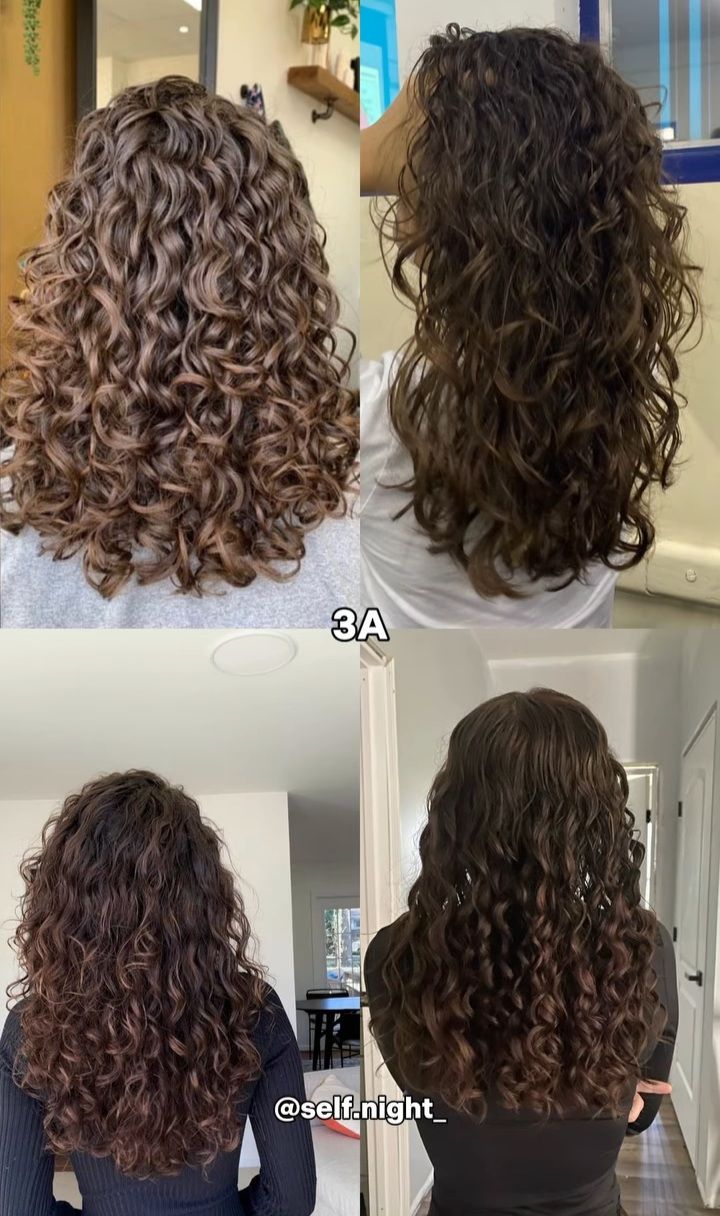
Is this you? (The Mirror Check)
If you have 3A hair, your curls are big, loopy, and bouncy. Think of the diameter of a piece of sidewalk chalk or a thick highlighter.
- The Shrinkage: It’s "deceiving." When your hair is wet, it might look like it's down to your waist, but as it dries, it springs up about 10–20%.
- The Shine: You probably notice that your hair is naturally very shiny compared to your friends with tighter curls. That’s because your "S" shape is wide and flat, so it reflects light like a mirror.
- The Frizz: Your frizz doesn't usually look like a "cloud." It looks like a "halo"—tiny little hairs standing up all over the top of your head while the curls underneath stay looped.
The Scientific "Why" (The Structure)
Your hair grows from a slightly curved follicle, creating a Wide Ellipse shape.
- The Weakness: Because the "S" is so big, it has no internal "skeleton." It is the most Weight-Sensitive hair type. If you use a product that is too heavy, your curl will literally "collapse" and turn into a flat, limp wave by lunchtime.
- The Gravity Battle: Gravity is constantly pulling on your loops. You aren't fighting dryness as much as you are fighting Volume Loss.
How to Care for 3A (The Protocol)
1. The Wash & Condition
- The Shampoo: You need a Volumizing, Sulfate-Free Shampoo. You want to strip away any "film" from the day before so your roots stay light and bouncy.
- The Conditioner: Use a Lightweight, Rinse-out Conditioner. Look for "Silk" or "Milk" proteins. These give your fine strands some "fake strength" so they don't stretch out.
2. Styling & Treatment
- The Move: "Pulse-Scrunching." After you put in your product, flip your head upside down and squeeze your hair toward your scalp. This "teaches" the big loops to stay tight.
- The Product: Use Flaxseed Gel or Aloe-based Milks. These dry into a "cast" (a crunchy shell) that holds the loop together against gravity. Once it's 100% dry, you just "scrunch out the crunch" for soft, bouncy curls.
The "3A" Tool Kit
- Cotton T-Shirt: Never use a regular towel. The loops on a towel will shred your fine 3A cuticles and cause that "halo frizz."
- Microfiber Plopping Cap: This holds your curls against your head while they dry so gravity doesn't stretch them out.
- Wide-Tooth Comb: Only use this in the shower while you have conditioner in. Never, ever brush 3A hair when it's dry unless you want to look like a lion.
3B
3B: The Springy Ringlets
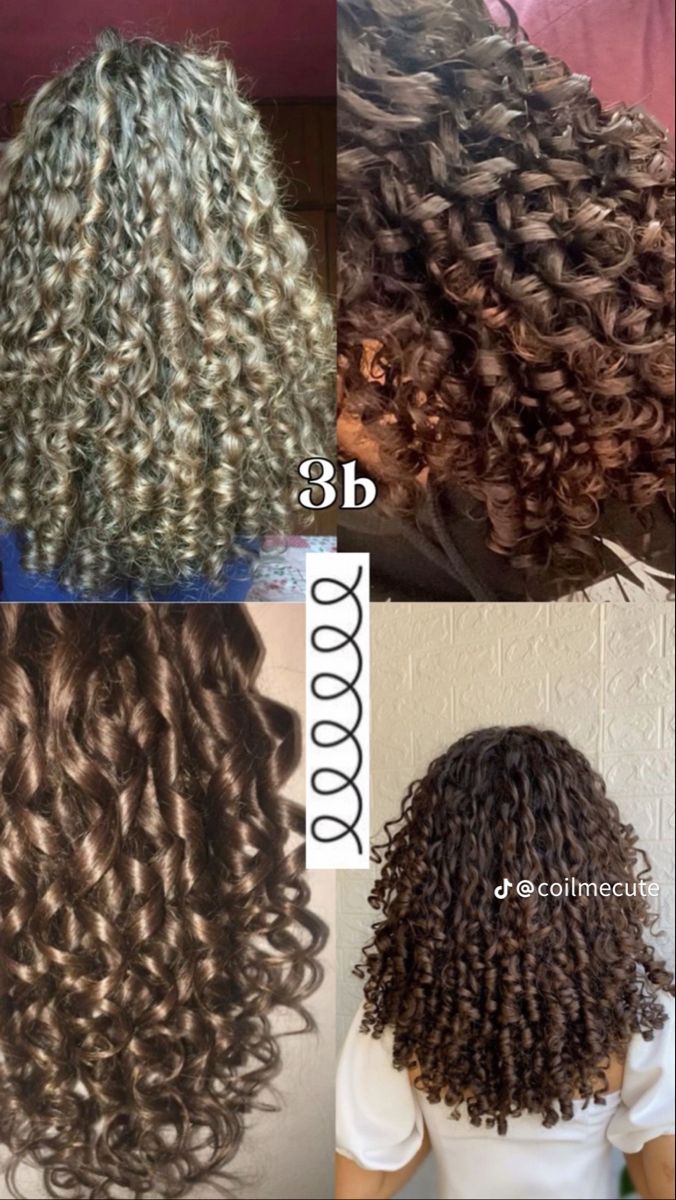
Is this you? (The Mirror Check)
If you have 3B hair, your curls are defined, bouncy ringlets about the diameter of a Sharpie marker or your index finger.
- The "Boing" Factor: This is the springiest hair type. If you pull a curl down to your chest and let it go, it snaps back to your chin instantly. It has high rebound elasticity.
- The Frizz Pattern: Your frizz doesn’t usually stay at the roots. It happens in the middle of the hair shaft. You’ll have a perfect ringlet at the bottom, but the middle looks "fuzzy" or "expanded."
- The Weather Report: Your hair is a barometer. The moment there is humidity, your ringlets "swell" and lose their definition, turning into a voluminous, soft cloud.
The Scientific "Why" (The Structure)
Your hair grows from a "hooked" follicle, creating a Compressed Ellipse.
- The Mid-Shaft Abrasion: Because your curls are so springy, they are constantly rubbing against each other as you move. This Friction physically wears down the cuticle scales in the center of the hair strand.
- The Oil Blockage: Your scalp’s natural sebum (oil) tries to travel down the spiral, but because the "turn" of a 3B ringlet is so frequent, the oil gets "stuck" at the first 2-3 inches. This leaves your mid-lengths and ends permanently hungry for lubrication.
How to Care for 3B (The Protocol)
1. The Wash & Condition
- The Shampoo: Use a Moisturizing Cream Shampoo. You need a cleanser that leaves a light "film" of moisture behind so the ringlets don't feel "squeaky" (which means they are stripped).
- The Conditioner: You need a Deep Conditioner every wash day. Look for Behentrimonium Methosulfate—it’s a natural ingredient from Colza oil that gives 3B hair the "slip" it needs to not snag.
2. Styling & Treatment
- The Move: "Clumping." While your hair is soaking wet, use a 7-Row Defining Brush. This forces the individual 3B strands to "marry" into uniform ringlets instead of separating into frizz.
- The Product: Layering is key. Use a Water-based Leave-in, followed by a light oil (Argan or Grapeseed) to act as a lubricant, then a Medium-hold Gel to lock the ringlet in place.
3C
3C: The Pencil Corkscrews
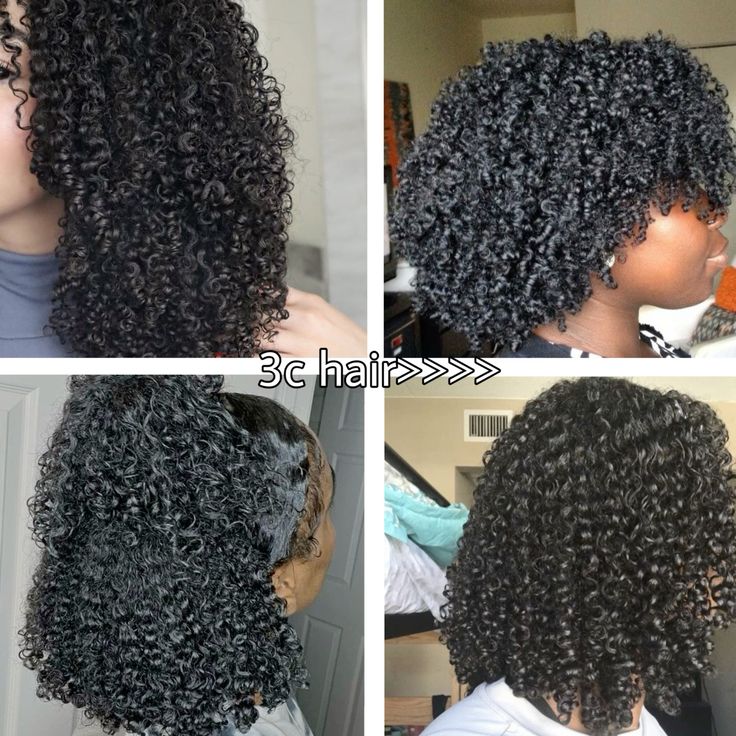
Is this you? (The Mirror Check)
Your hair is made of thousands of tiny, tight corkscrews the width of a pencil or a drinking straw.
- The Volume: You have "Big Hair" by nature. Even if your strands are fine, the sheer number of corkscrews creates massive height and width.
- The Velcro Effect: If you try to run your fingers through your hair when it's dry, they will get stuck. Your curls "hook" into each other like Velcro.
- The Nape Matting: You probably notice a "tangle ball" at the back of your neck every morning. This is because the 3C corkscrews rub against your clothes and knot up.
The Scientific "Why" (The Structure)
This is the "Bridge Texture." It’s the meeting point between curly and coily.
- Highest Density: 3C hair usually has the most follicles per square inch. This means there is zero space between curls.
- Compression Stress: Because the corkscrews are so tight, the hair is under constant torsional stress. It wants to shrink! You can lose 50% of your length the moment your hair dries. If those corkscrews aren't "moisturized into submission," they will expand outward to find moisture in the air, causing a massive "poof."
How to Care for 3C (The Protocol)
1. The Wash & Condition
- The Shampoo: Switch to a Cleansing Conditioner (Co-Wash) for 3 out of 4 washes. You need to keep as much natural oil as possible. Use a real shampoo only once a week to "reset."
- The Conditioner: You need Maximum Slip. Look for ingredients like Marshmallow Root or Slippery Elm. If the conditioner doesn't feel "slimy" on your fingers, it won't work for 3C.
2. Styling & Treatment
- The Move: "Zonal Detangling." Divide your hair into at least 6-8 sections. Never try to comb 3C hair as one big mass; you will just snap the strands.
- The Product: Use Heavy Creams or Custards. You need a product with "weight" to physically pull the corkscrews down and stop them from interlocking. The "Praying Hands" method is your best friend—smooth the product down each section to "marry" the curls.
4A
4A: The Cylindrical Micro-Coil
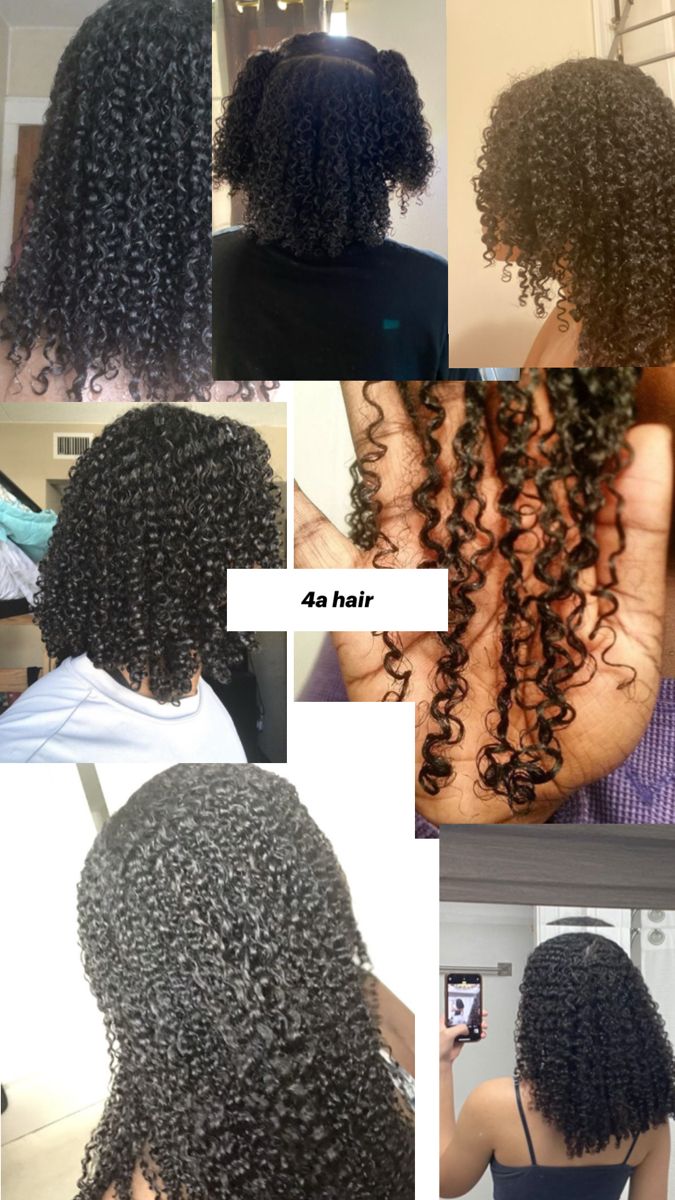
I. Structural Identity (The Mirror Check)
- The Fiber: Small, visible "S" shaped springs. If you take a single strand and look at it against a white piece of paper, it looks like a perfect miniature corkscrew about the width of a crochet needle.
- Shrinkage Physics: 50–60% Shrinkage. The "O" shape has high structural memory. It wants to "snap back" to its origin point. If your hair goes from your shoulders to your ears when it dries, it is 4A.
- The Fracture Point: The Outer Curve of the "S." Because the coil is so tight, the cuticle scales (the shingles) are permanently "propped open" at the bend of the curve. This is why 4A suffers from Flash-Drying—water enters easily but evaporates in minutes, leaving the hair "ashy."
II. The Mechanical Wash & Scalp Protocol
- The Scalp Tool: Soft-Point Silicone Scalp Massager. 4A is dense. You cannot "scrub" or you will interlock the coils. Use the massager in a Vertical Pulsing Motion (press down and release) to lift sebum without tangling the roots.
- The Spray Tool: Flairosol Continuous Mist Bottle. You must re-saturate every 60 seconds during styling. 4A must stay at 100% Water Saturation or the product will just sit on top of the "Flash-Dried" fiber.
- The Shampoo (The Cleanse): Use a Creamy Sulfate-Free Shampoo (e.g., SheaMoisture Raw Shea Butter Moisture Retention Shampoo).
The Mechanism: Apply to the roots and "shingle" (smooth) the shampoo down the hair in a downward motion. Never bunch the hair up.
- The Conditioner (The Slip): Use a Rinse-out Detangling Conditioner (e.g., The Mane Choice Easy On The CURLS). Apply until the hair feels like "seaweed."
- The Treatment (The Deep Dive): Use a Moisturizing Mask (e.g., TGIN Honey Miracle Hair Mask) once a week.
The Mechanism: Leave it on for 20 minutes under a Heating Cap. Heat is mandatory to force moisture into the "Flash-Dry" 4A core.
III. Oil Chemistry: Scalp Health vs. Porosity
4A is typically High Porosity (sinks in water) because of those "propped open" cuticles.
| If the Scalp is... | The Best Oil | The Scientific Why |
|---|---|---|
| Oily / Itchy | Sweet Almond Oil | Lightweight and has antimicrobial properties to soothe the scalp without clogging the "leaky" 4A cuticle. |
| Dry / Flaky | Avocado Oil | A monounsaturated fat small enough to enter the hair shaft and "fill the gaps" in the 4A cortex. |
| Normal | Olive Oil | Provides a heavy, protective barrier to slow down the 4A "Flash-Dry" evaporation. |
4B
4B: The Angular Zig-Zag Hinge
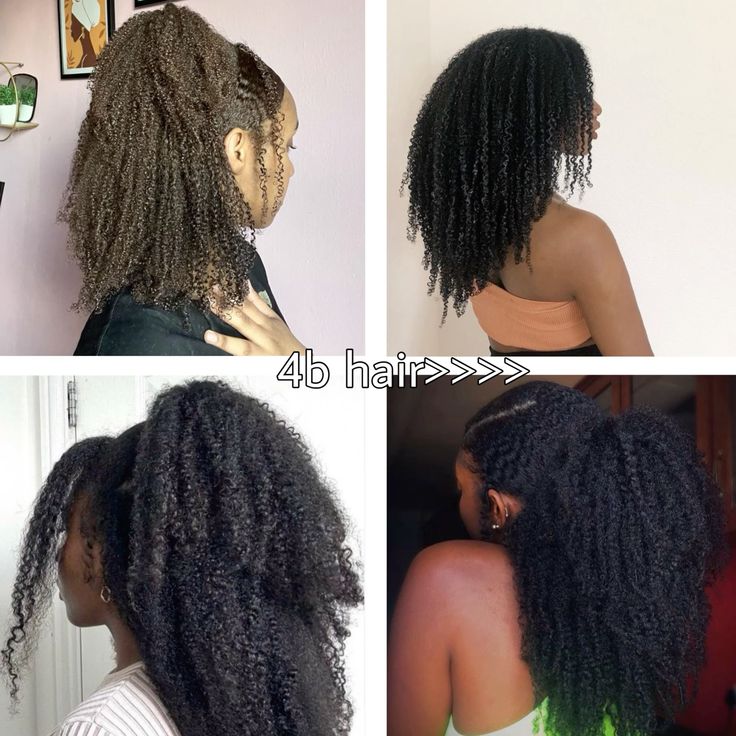
I. Structural Identity (The Mirror Check)
- The Fiber: Sharp, jagged "Z" shapes. There is no circle. If you stretch a strand, it looks like a lightning bolt.
- Shrinkage Physics: 70% Shrinkage. The "Z" angles fold into each other like an accordion.
- The Hinge Stress: Every "Z" bend is a Mechanical Hinge. This is the weakest point. If you bend a wire back and forth, it snaps. 4B hair snaps at the "Z" bends if the fiber becomes "stiff" (dehydrated).
- Optical Physics: Light hits the sharp angles and scatters. This makes the hair look Matte. It is not "dirty"; it is just diffusing light.
II. The Mechanical Wash & Scalp Protocol
- The Scalp Tool: Precision-Tip Applicator Bottle. Do not pour shampoo over the hair. Use the bottle tip to apply cleanser directly to the scalp between your protective braids.
- The Spray Tool: Warm Water Spray Bottle. 4B is "wiry." Cold water makes the "Z" angles brittle. Warm water keeps the hinges flexible during detangling.
- The Shampoo (The Cleanse): Wash in 8-10 Large Braids. Use a Bentonite Clay Wash (e.g., Terressentials Pure Earth Hair Wash).
The Mechanism: Squeeze the braids like a sponge under the water. This cleans the hair with Zero Friction, protecting the "Z" hinges from rubbing together.
- The Conditioner (The Lubricant): While still in braids, squeeze a Heavy Cholesterol Conditioner into the hair (e.g., Africa’s Best Cholesterol).
- The Treatment (The Softener): Use a High-Emollient Mask (e.g., Camille Rose Algae Renew) with a Hair Steamer. Steam is the only way to soften the "stiff" 4B protein bonds so the hair becomes pliable.
III. Oil Chemistry: Scalp Health vs. Porosity
4B is typically Low Porosity (floats in water) because the "Z" angles are tightly packed.
| If the Scalp is... | The Best Oil to Use | The Scientific Why |
|---|---|---|
| Oily / Itchy | Jojoba Oil | It mimics natural human sebum. It tricks the scalp into stopping overproduction while remaining light enough to sit on the "Z" hinge. |
| Dry / Flaky | Argan Oil | A very small molecular weight oil that can slip under the tightly-closed 4B cuticles when paired with Steam. |
| Normal | Mango Butter | A heavy occlusive that acts as a physical shock absorber on the outside of the hinge to prevent snapping. |
4C
4C: The Micro-Coil Master
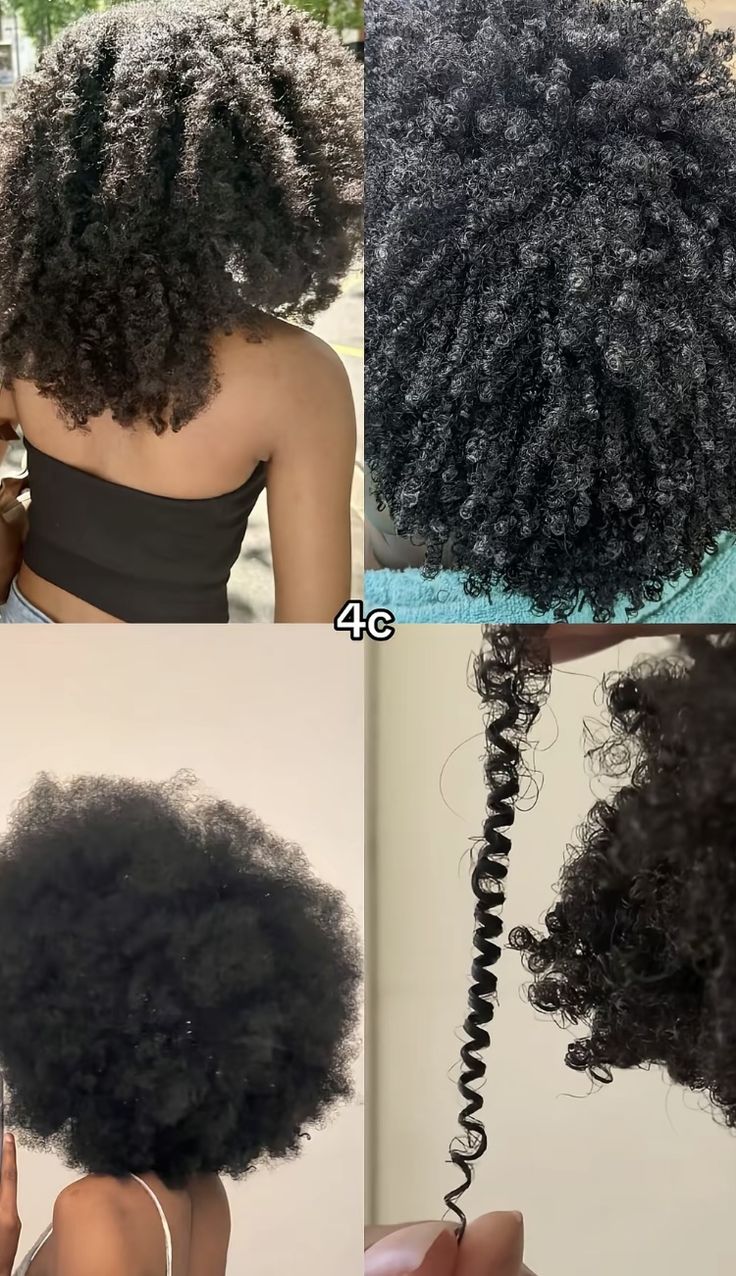
I. Structural Identity (The Mirror Check)
- The Fiber: Microscopic coils thinner than a thread of silk. It looks like a soft cloud.
- Shrinkage Physics: 80-90% Shrinkage. Your hair is a high-tension spring. 12 inches can look like 2 inches.
- The Fracture Point: The Entire Strand. 4C has the thinnest cuticle layer of all human hair types. It has almost no "natural armor" against friction.
- The SSK Problem: Single Strand Knots (Fairy Knots). Because the coils are so tiny, a single hair loops around itself and ties a knot that must be cut out with scissors.
II. The Mechanical Wash & Scalp Protocol
- The Scalp Tool: Your Finger Pads. 4C is too fragile for plastic tools. Use the pads of your fingers to "walk" the cleanser across the scalp.
- The Spray Tool: Oil-Water Emulsion (90% Water, 10% Castor Oil). Mist this constantly. The oil in the water ensures the micro-coils are "pre-lubricated" as you touch them.
- The Shampoo (The Gentle Cleanse): Use a Gentle Moisturizing Shampoo (e.g., Design Essentials Almond & Avocado).
The Mechanism: Wash in sections. If you feel a tiny knot, STOP. Use oil to untie it immediately. If you wash over it, it becomes permanent.
- The Conditioner (The Slime): You need Maximum Slip. Use a conditioner with Slippery Elm or Marshmallow Root (e.g., Aussie Moist or Kinky-Curly Knot Today).
- The Treatment (The Repair): Finger-Detangle ONLY. Put the comb away. Your nerves can feel a knot; a comb will just rip it out.
III. Oil Chemistry: Scalp Health vs. Porosity
4C has a "naked" cuticle and requires the heaviest protection.
| If the Scalp is... | The Best Oil to Use | The Scientific Why |
|---|---|---|
| Oily / Itchy | Grapeseed Oil | Extremely light and high in Vitamin E; it won't weigh down the micro-coils but will treat scalp inflammation. |
| Dry / Flaky | Castor Oil | The heaviest "Liquid Glove." It creates a physical barrier that the air cannot penetrate, locking moisture into the 4C core. |
| Normal | Shea Butter | Provides a thick, fatty layer that mimics the missing cuticle protection on the 4C fiber. |
3A/3B
3A/3B: The Silk Ringlet Mix

I. The Hybrid Identity (The Mirror Check)
You don't have one uniform look; instead, your head is a map of two different diameters.
- The Crown & Surface (3A): The top layer usually consists of large, silk-like loops the size of sidewalk chalk. This area is the most prone to "environmental frizz" (moisture in the air).
- The Nape & Interior (3B): The hair underneath and near your neck usually coils into tighter, springy ringlets the size of a Sharpie marker.
- The "Boing" Factor: This hybrid has High Elasticity. If you pull a strand, it doesn't just fall back; it snaps back.
- The Weight Sensitivity: This is the most important note. Because 3A is easily weighed down, but 3B needs moisture, you are constantly balancing Volume vs. Definition.
II. The Scientific "Why" (Structural Chemistry)
- Variable Ellipse: Your follicles vary in shape across your scalp. Some are wide ovals (3A), while others are more compressed (3B).
- The Sebum Gap: Your scalp's natural oils can easily travel down the large 3A loops, but they get "bottlenecked" when they hit the tighter 3B spirals in the back. This is why the back of your head might feel drier or more tangled than the front.
- Cortical Bone Stress: At the "turn" of the 3B ringlet, the internal protein bonds are under more tension than the 3A loops. This makes the 3B sections more porous and likely to "poof" if not sealed correctly.
III. The 3A/3B Formulation Protocol
When selecting or making products for this hybrid, you need "Weightless Moisture."
1. The Cleanse (pH 5.5)
The Goal: Remove "film" so the 3A loops stay light, but don't strip the 3B ringlets.
Key Ingredient: Decyl Glucoside or Cocamidopropyl Betaine (gentle surfactants that clean without "squeaking").
2. The Condition (The "Silk" Factor)
The Goal: Provide "Slip" for the tighter 3B curls without leaving a heavy residue that kills 3A volume.
Key Ingredients: Behentrimonium Methosulfate (gold standard for slip) and Hydrolyzed Silk or Wheat Protein (fills gaps in 3B cuticle without weight).
3. The Sealant (The Anti-Gravity Layer)
The Goal: Hold the ringlet shape against gravity.
The Texture: Use a Film-Forming Humectant (Aloe Vera or Flaxseed Gel). These create a "clear cast" that keeps 3B from expanding while keeping 3A bouncy.
IV. The 3A/3B Tool Kit
- The Denman Brush (7-Row): Essential for this hybrid. It "marries" the 3A and 3B strands together so they clump into uniform curls rather than looking like two different hair types.
- Diffusing (The "Hover" Method): Since 3A hair collapses when wet, you should hover-diffuse to "set" the curls before they have a chance to stretch out from the weight of the water.
3B/3C
3B/3C: The Corkscrew Volume

I. The Hybrid Identity (The Mirror Check)
This profile is characterized by an immense amount of "horizontal volume." It doesn't just grow down; it grows out.
- The Perimeter (3B): You likely have springy ringlets the width of a Sharpie marker around your face and the very bottom layer of your hair. These sections have a visible "S" shape.
- The Interior & Crown (3C): The vast majority of your hair consists of tight, pencil-width corkscrews. These are packed so densely that they support each other, creating a "cloud" of defined curls.
- The Velcro Effect: Because the corkscrews are so tight and numerous, they "hook" into one another. If you try to run your fingers through dry hair, they will likely get stuck mid-shaft.
- The Length Deception: Significant "Spring Factor." Your hair might look like a bob when dry but reach the middle of your back when wet.
II. The Scientific "Why" (Structural Chemistry)
- Follicle Compression: Your follicles are "hooked" ovals. The 3C sections have a more intense "hook," causing the hair to rotate more frequently as it grows.
- Torsional Stress: Tight corkscrews place the fiber under constant internal pressure. This makes the cuticle more likely to lift at the "bends," leading to faster moisture loss.
- High Follicle Density: High number of hairs per square inch. This creates "micro-climates" on the scalp that trap heat and moisture, leading to potential sensitivity or itchiness.
III. The 3B/3C Formulation Protocol
Requirement: Transitioning toward "High-Slip Emollients."
1. The Cleanse (The "Low-Lather" Reset)
The Goal: Cleanse high-density scalp without tangling "Velcro" corkscrews.
The Strategy: Use a "Low-Poo" or Cleansing Cream for lubrication during the wash.
Key Ingredients: Cocamidopropyl Betaine paired with Aloe Barbadensis Leaf Juice.
2. The Condition (The "Slippery" Layer)
The Goal: Break the "Velcro" bond between curls to detangle without snapping.
Key Ingredients: Marshmallow Root (mucilage for glide) and Behentrimonium Chloride (neutralizes static charge).
3. The Sealant (The Weight Factor)
The Goal: Provide enough weight to "tame" horizontal volume and lock corkscrews in place.
Key Ingredients: Pectin (hold) and Shea Butter or Babassu Oil (weight and shine).
IV. The 3B/3C Tool Kit
- The Wide-Tooth Comb / Finger Detangling: Never use a fine-tooth comb. Requires "zonal detangling" to avoid ripping through the corkscrew hinges.
- The "Praying Hands" Method: Smooth hands down the length to "clap" the ringlets and corkscrews together into uniform clumps.
- The "Plopping" Technique: Use a microfiber towel for 20 minutes to remove water without disrupting tight corkscrew alignment.
3C/4A
3C/4A: The Bridge Texture

I. The Hybrid Identity (The Mirror Check)
A mix of high-definition corkscrews and high-shrinkage micro-coils. It feels like having two different densities on one head.
- The Crown & Nape (4A): Cylindrical "Micro-Coils" the width of a crochet needle. These sections feel spongy and appear matte.
- The Mid-Lengths & Perimeter (3C): Defined corkscrews the width of a pencil. These clump easily and have a slight sheen.
- The "Flash-Dry" Effect: Notorious for absorbing water instantly but appearing bone-dry within 10 minutes of exiting the shower.
- Shrinkage Duality: "Tiered" shrinkage—3C sections shrink ~50% while 4A shrinks up to 70%, creating an uneven shape if not sectioned.
II. The Scientific "Why" (Structural Chemistry)
- Follicle Transition: Transition from "Hooked Oval" (3C) to "Hooked Ellipse" (4A), making the fiber flatter and more twisted.
- Cuticle Propping: In 4A sections, the tight coil physically props cuticle scales open at every turn, creating "leaky" hair where moisture escapes fast.
- The "Hydration Gap": 3C clumps into families while 4A prefers individual strands, making it hard to find products that aren't too heavy or too light.
III. The 3C/4A Formulation Protocol
Requirement: "High-Saturation Chemistries"
1. The Cleanse (The "Moisture-Prep" Wash)
The Goal: Cleanse without raising already "propped open" 4A cuticles.
The Strategy: Use a Sulfate-Free Cream Cleanser rich in "Super-Fatting" agents.
Key Ingredients: Sodium Cocoyl Isethionate paired with Shea Butter derivatives.
2. The Condition (The "Seaweed" Texture)
The Goal: Create "Hydropathic Weight" to physically stretch coils into the corkscrew pattern.
Key Ingredients: Behentrimonium Methosulfate (BTMS) for flash-lubrication and Slippery Elm Bark for film-forming slip.
3. The Sealant (The L.C.O. Method)
The Goal: Plug the "leaks" in the 4A cuticle.
The Strategy: Liquid (Water) → Cream (Leave-in) → Oil (Sealant).
Key Ingredients: Agave Nectar (soft hold humectant) and Avocado Oil (cortex penetration).
IV. The 3C/4A Tool Kit
- The Flairosol Mist Bottle: Essential for styling dripping wet hair so the 4A sections don't "flash-dry" during the process.
- The "Shingling" Technique: Smoothing product from root to tip in small sections to force 4A micro-coils to clump like 3C corkscrews.
- The Steam Cap: 15 minutes of steam is required to "force" moisture into the stubborn 4A sections of this hybrid.
4A/4B
4A/4B: The S-to-Z Transition

I. The Hybrid Identity (The Mirror Check)
This profile is characterized by a "dual-texture" surface that can make the hair look much more voluminous and "matte" than it actually is.
- The Visible "S" (4A): Clear, defined coils the width of a crochet needle. These sections usually have a distinct "clump" and reflect some light.
- The Jagged "Z" (4B): Instead of a coil, these strands bend in sharp, lightning-bolt angles. There is no clear "ringlet" here; the hair grows in a zig-zag pattern.
- The "Bird's Nest" Knots: Because the S-shape and the Z-shape don't "nest" into each other well, they tend to interlock. This hybrid is the most prone to single-strand knots (fairy knots) where the two patterns meet.
- Inconsistent Shrinkage: The 4A sections bounce, while the 4B sections "contract." This often results in the hair looking shorter in the back or crown where 4B is usually most dominant.
II. The Scientific "Why" (Structural Chemistry)
- The Ortho-Paracortical Shift: In 4A hair, the two types of cells in the hair cortex are distributed somewhat evenly, allowing for a curve. In 4B hair, they are distributed unevenly and abruptly, forcing the hair to "kink" at a sharp angle.
- The "Hinge" Point: Every "Z" bend in 4B hair is a mechanical weak point or a "hinge." The cuticle is stretched very thin at these sharp angles, making the hair extremely fragile at every bend.
- Surface Area Friction: Because the Z-pattern has more "edges" than a smooth coil, the strands create more friction when they touch. This is why 4A/4B hair feels "velvety" or "cottony" rather than "silky."
III. The 4A/4B Formulation Protocol
Requirement: "Plasticizing Emollients"—ingredients that make the fiber more flexible so the "Z" bends don't snap.
1. The Cleanse (The "Conditioning Wash")
The Goal: Soften the "hinge" points before you even begin to detangle.
The Strategy: Use a Co-Wash or a Cream-to-Oil Cleanser. Avoid anything that "bubbles" too much to prevent 4B angles from snapping.
Key Ingredient: Cetrimonium Chloride (for instant static reduction and anti-friction).
2. The Condition (The "Elasticity" Boost)
The Goal: Increase the "Tensile Strength" of the hair so it can survive the "S-to-Z" transition.
Key Ingredients: Hydrolyzed Vegetable Protein (reinforces hinges) and Babassu Oil (mimics natural lipids to fill gaps in the stretched cuticle).
3. The Sealant (The Anti-Friction Barrier)
The Goal: Create a "Lubricant Shield" so the Z-patterns slide past each other instead of hooking.
Key Ingredients: Cupuaçu Butter (high water-retention for flexibility) and Castor Oil (protective film).
IV. The 4A/4B Tool Kit
- Sectional Braiding: Hair must remain in 6–8 braided sections while washing/styling to prevent S and Z patterns from marrying into a massive tangle.
- The "L-C-O" Sequence: Liquid (Water) → Cream (Softener) → Oil (Sealant). For 4B hair, the Oil must come last to lock the cream into the jagged bends.
- Seamless Wide-Tooth Comb: Only use combs with no "seams." Any tiny ridge on a comb will snag on the 4B "Z" angles and cause breakage.
4B/4C
4B/4C: The High-Shrinkage Powerhouse

I. The Hybrid Identity (The Mirror Check)
This profile is a master of disguise. Because of the density and the tight nature of the coils, it often looks much shorter than its actual length.
- The Crown & Interior (4C): Usually no discernible curl pattern when dry. Consists of tiny, zig-zagging micro-coils tighter than a ballpoint pen spring. Feels like a soft, dense "cloud."
- The Nape & Sides (4B): Sharp, jagged "Z" angles with slightly more "reach" than 4C sections, but equally matte in appearance.
- The Shrinkage Factor: Can experience 75% to 85% shrinkage. Twelve inches of hair can easily look like three inches.
- The "Thirst" Paradox: Highest surface area of all types. Requires 3x more product to coat every bend, yet can become greasy on the surface while remaining bone-dry inside the fiber.
II. The Scientific "Why" (Structural Chemistry)
- Flat-Ribbon Geometry: Under a microscope, the hair is a flat, ribbon-like shape rather than round. This causes sharper bends and more "hinge" points prone to snapping.
- Minimal Cuticle Layers: Thinner protective "armor" compared to Type 3 hair, making it the most vulnerable to heat and mechanical friction.
- Low Sebum Migration: Tight coils and sharp "Z" angles prevent scalp oils from reaching the ends. The hair is effectively "starved" of natural lubrication from the start.
III. The 4B/4C Formulation Protocol
Requirement: "High-Adhesion Sealants" and "Acidic Closing" agents.
1. The Cleanse (The "Non-Stripping" Cream)
The Goal: Cleanse the scalp without disturbing the delicate "cloud" of hair.
The Strategy: Use a Sulfate-Free Mud Wash (Rhassoul/Kaolin Clay) or a Highly Emollient Cream Cleanser.
Key Ingredient: African Black Soap (diluted) or Bentonite Clay to clarify while mineralizing the fiber.
2. The Condition (The "Melting" Slip)
The Goal: "Melt" the tangles. Never detangle without a product providing extreme glide.
Key Ingredients: Fenugreek (high lecithin for slippery film) and Guar Hydroxypropyltrimonium Chloride (cationic polymer for smoothness).
3. The Sealant (The Heavy-Duty Barrier)
The Goal: Lock water inside the fiber for 5–7 days.
The Texture: Heavy Butters and Raw Oils.
Key Ingredients: Raw Shea Butter (fatty acid barrier) and Castor Oil/JBCO (thick protective seal).
IV. The 4B/4C Tool Kit
- The "Band Method": Use soft hair ties to stretch the hair in sections while drying to manage shrinkage and prevent tangling.
- Finger Detangling ONLY: Tools cause "micro-snaps" in 4C sections. Fingers allow you to feel knots and tease them apart gently.
- The Greenhouse Effect: Use a plastic cap over moisturized hair for 1–2 hours to use body heat to force moisture into the flat-ribbon fibers.
Now that you have learnt about your hair type, let's look at the fundamental topics for hair growth.
The Fundamentals
of Growth
Remembering that scalp health and porosity matters as much as knowing your hair type.
Porosity
The Gatekeeper of Moisture
🧬 CARD 12: POROSITY
What is it, really?
Think of your hair strand like a roof covered in shingles. Those shingles are your cuticles. Porosity is simply a measure of how those shingles sit on your hair.
- Are they clamped shut like a fortress?
- Are they laid perfectly flat?
- Or are they chipped and standing wide open like a broken window?
This matters because it dictates whether water can get into your hair and, more importantly, if it stays there.
How to Identify Your Porosity (The Clean Strand Test)
Don't do this on dirty hair! Oils and products will fake the result.
The Prep: Wash a couple of strands of hair with a clarifying shampoo to remove all grease. Let them air-dry completely.
The Test: Drop the clean strands into a clear glass of room-temperature water.
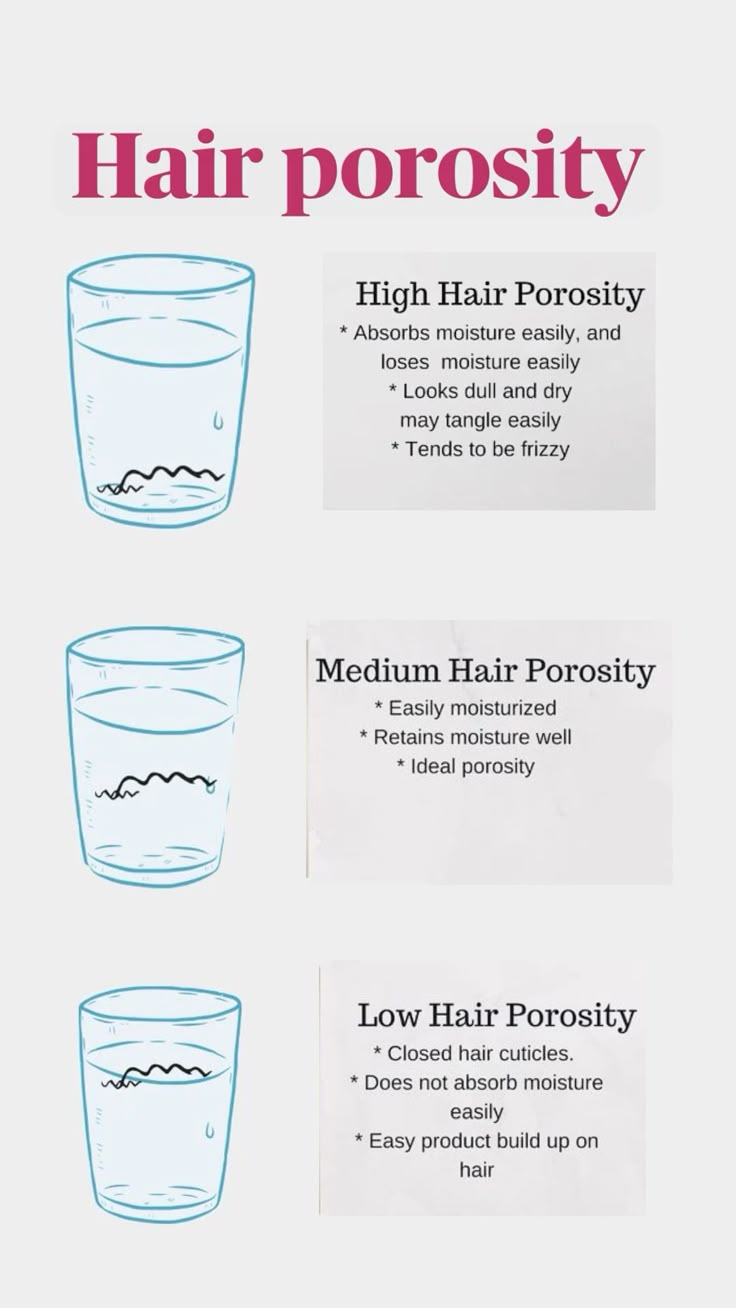
Visualizing the 5-minute wait result
The Wait: Watch them for 3 to 5 minutes.
• Low Porosity: The hair stays floating on the very top. It refuses to sink.
• Medium Porosity: The hair slowly drifts to the middle of the glass.
• High Porosity: The hair sinks to the bottom like a stone almost immediately.
TYPE 1: LOW POROSITY
(The Locked Gate)
The Science: Your cuticles are tightly overlapping and clamped shut. Your hair is actually very healthy and "strong," but it’s essentially waterproof.
The Struggle: You’ll notice water "beads up" on your hair in the shower. Products just sit on top of your hair and look white or greasy because they can’t get inside.
The Care Strategy: You have to Force the Gates Open.
The Secret Weapon: HEAT. You cannot deep condition without a steamer, a thermal cap, or a warm towel. Heat physically "swells" the hair shaft and forces those shingles to lift so the moisture can crawl in.
The Product Choice: Use Humectants (Glycerin, Honey, Agave). These molecules grab water from the air and shove it into the hair. Avoid heavy butters and "grease"—they will never get inside and will just cause massive buildup. Use lightweight "Milks" or liquid leave-ins.
TYPE 2: HIGH POROSITY
(The Broken Window)
The Science: Your cuticles are either naturally raised (common in Type 4 hair) or they’ve been "blown open" by heat, bleach, or rough combing. The shingles are chipped or missing.
The Struggle: Your hair drinks water instantly, but 10 minutes later, it’s bone-dry. It’s like pouring water into a bucket with holes in the bottom. This hair tangles constantly because the raised shingles "hook" into each other.
The Care Strategy: You have to Plug the Holes.
The Secret Weapon: PROTEIN & COLD. You need Hydrolyzed Proteins (Silk, Wheat, or Keratin). These act like "patching cement" for your chipped shingles. Always finish your shower with a Cold Water Rinse to try and shock the cuticles into laying flat.
The Product Choice: You need Heavy Sealants. This is where Castor Oil and Shea Butter shine. You need a thick, heavy "Raincoat" on the outside of your hair to act as a fake cuticle and stop the water from evaporating.
TYPE 3: MEDIUM POROSITY
(The Balanced House)
The Science: Your cuticles are laid just right. They open enough to let moisture in and close enough to keep it there.
The Struggle: Not much! This is the "easiest" type to manage, but you have to be careful not to damage it into High Porosity with too much heat.
The Care Strategy: Maintenance. Use a balance of moisture and a little protein. You don't need extreme heat or extreme sealants—just a good, consistent routine.
Scalp Biome
The Foundation of Growth
THE SCALP BIOME
What is the Scalp, Really?
Most people treat their scalp like it’s just "skin with hair," but it’s actually a high-speed chemical factory. It has more blood vessels, more sweat glands, and more oil (sebum) glands than almost anywhere else on your body.
It also has its own Microbiome—a tiny world of bacteria and fungus that lives there 24/7. When that world is balanced, your hair grows. When it’s not, your hair thins out and breaks.
How to Identify Your Scalp Type
The "Second Day Blot Test": Wash your hair, use no products on the scalp, and wait 48 hours. Press a clean, brown paper napkin against your scalp at the crown.
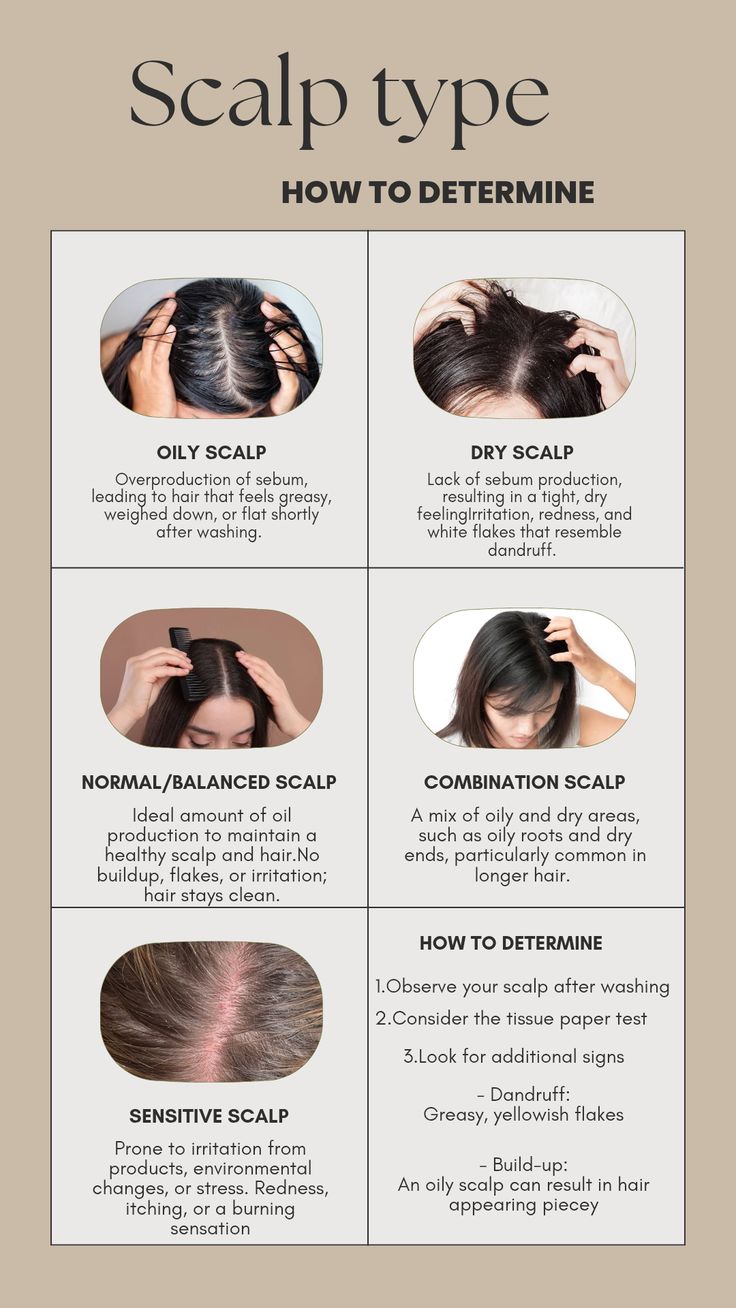
Compare your napkin result to identify your type
• Oily Scalp: Translucent oil spot. Hair feels "heavy" or "wet" at roots.
• Normal Scalp: Faint trace of oil. No itching, no flakes.
• Dry Scalp: Napkin is bone dry. Scalp feels tight like a face needing moisturizer.
• Inflamed/Dandruff: Yellow/white flakes, itchy or red skin.
TYPE 1: THE OILY SCALP
(The Over-Producer)
The Science: Your glands are in overdrive. This is a buffet for Malassezia fungus, which poops out Oleic Acid that irritates skin and smothers follicles.
The Mistake: Adding grease to an oily scalp. You are literally feeding the fungus.
The Secret Weapon: SALICYLIC ACID (BHA) to unclog hardened oil. Use a sulfate-free clarifying shampoo every 7–10 days.
TYPE 2: THE DRY SCALP
(The Dehydrated Desert)
The Science: Lack of Water, not just oil. The moisture barrier is broken, causing tiny white flakes like dust.
The Mistake: Using Petroleum/Mineral Oil. It acts like plastic wrap and doesn't hydrate.
The Secret Weapon: HUMECTANT SERUMS (Hyaluronic Acid/Aloe) followed by one drop of Jojoba Oil.
TYPE 3: THE INFLAMED SCALP
(The Battleground)
The Science: Seborrheic Dermatitis. Sticky, waxy yellow flakes caused by an immune response to fungus.
The Mistake: Adding oil to inflammation. This is the #1 reason for crown thinning.
The Secret Weapon: KETOCONAZOLE or ZINC (medicated shampoo) left on for 5 minutes. Or ACV rinses to lower pH.

Oils
Lightweight vs. Heavy, and When to Use Each